News from the International Office
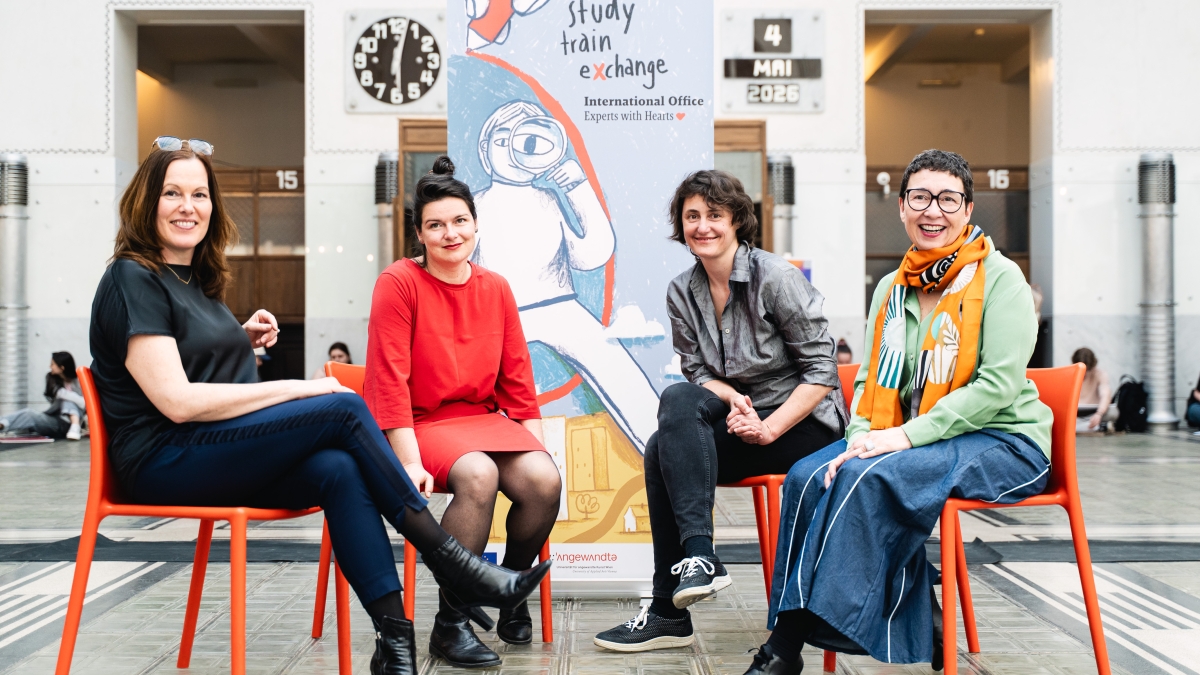
Wer sind wir? (Who are we)
Perspectives on the Angewandte – the inaugural film (mainly in German at the moment)Philosophy & Mission Statement International Office
Internationality is a strategic cornerstone of the University of Applied Arts Vienna. The International Office therefore sees
itself as a gateway to the world for students, teachers, researchers and administrative staff. It works in a sustainable,
inclusive and diverse manner and is as accessible as possible. With over 130 international partner institutions, we draw on
a strong global network for you, with personal contacts and strategic collaborations, thus guaranteeing optimal conditions
and support for your internationalisation projects. Networking is essential, especially in the scientific/artistic field.
It continues throughout your studies and into all stages of a scientific/artistic career. That is why our team supports all
networking activities worldwide, thereby contributing a little to ‘world peace’.
The head of the International Office at the University of Applied Arts Vienna, Astrid Anna Behrens, was asked to write an
article about this background and the philosophy based on it for the CUMULUS Association's journal: Call us the quiet Peace-Makers
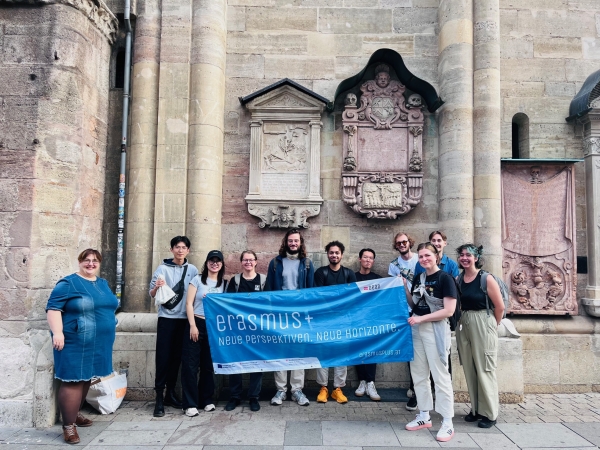
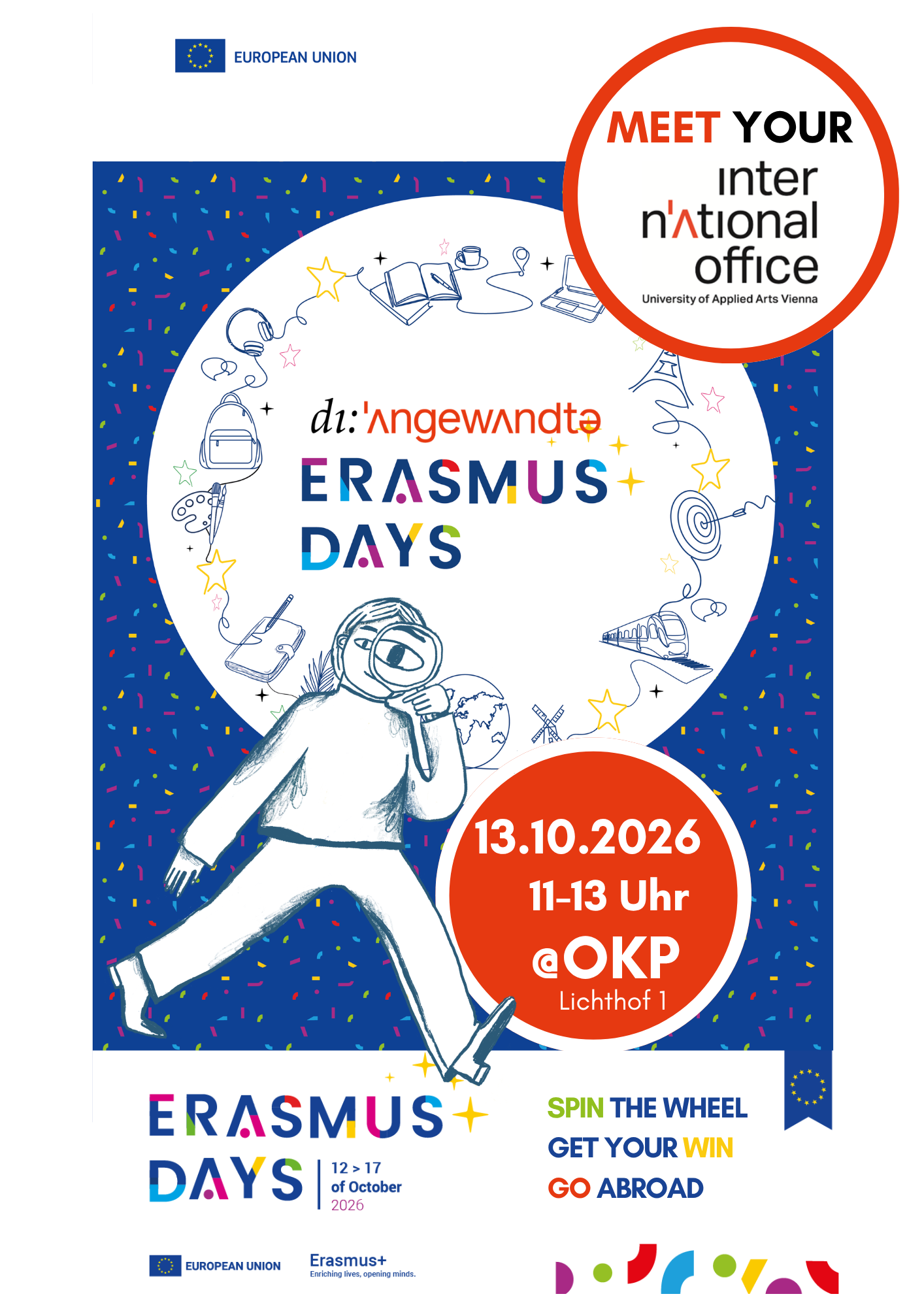
ERASMUS DAYS 2026
ERASMUS+ Impact Studies
Click here for the current study on the impact and benefits of Erasmus+ Staff Mobility. (January 2024)
Erasmus+ priority: Democratic participation – "Participate in Europe"
The E-modules videos “Participate in Europe” provide an introduction to European integration from a civic and political dimension.
The main target group are participants in the Erasmus+ programme, but the E-modules also speak to a broader audience. The
E-modules provide an introductory lens on European politics and institutions, the main values underpinning these institutions,
civic and political engagement, and participation, as well as a number of more specific themes (e.g. dimensions of gender
identity and equality, cultural diversity, European (colonial) history, Eastern and Western Europe, EU citizenship education,
and EP elections. All these themes are discussed in relation to international mobility and the Erasmus+ programme.
https://www.youtube.com/playlist?list=PLXH4liLvTcKbganQ8MZvwW2EsHxPg8IOF
Embrace Exchange 2026
The International Office invites you to the Angewandte Festival 2026
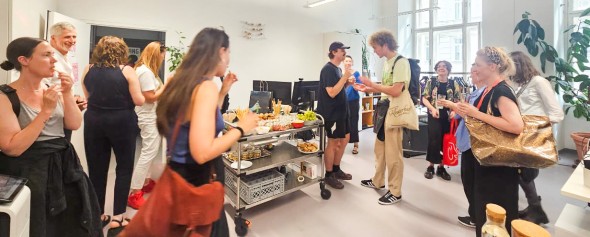
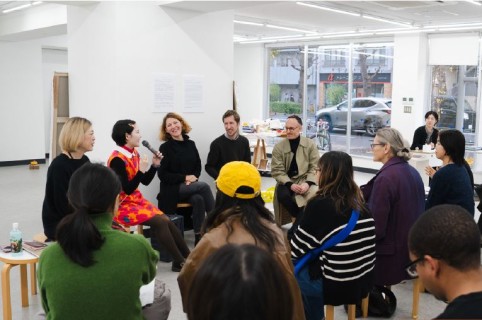
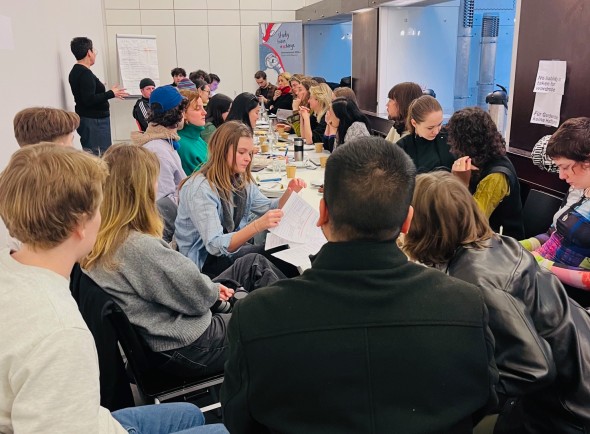
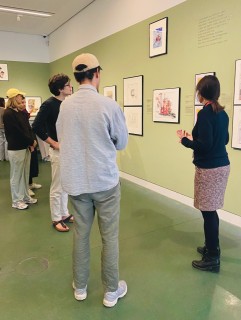
As part of the Angewandte Festival 2026, we invited our partners and interested parties to a special welcome meeting at the
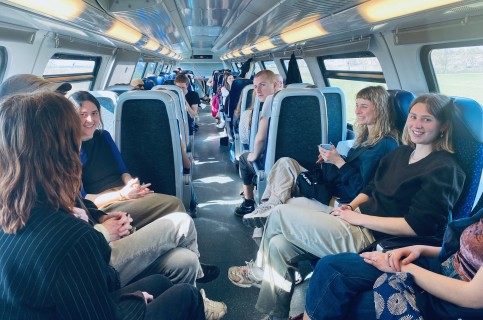
International Office under the motto EMBRACE EXCHANCE. The day began with a reception in the rooms of the IO, where our guests
were able to get to know each other and network over a buffet and drinks in a relaxed atmosphere. This was followed by a guided
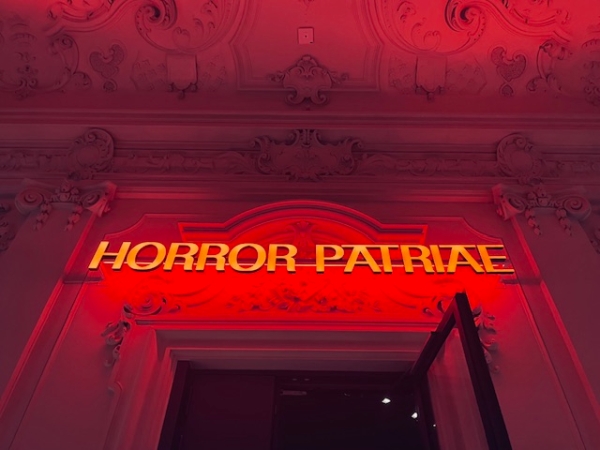
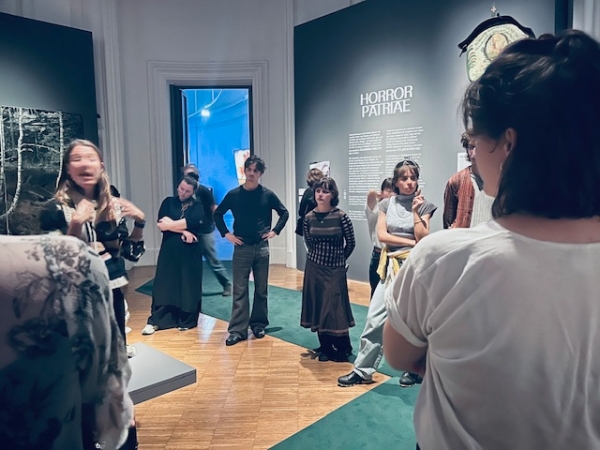
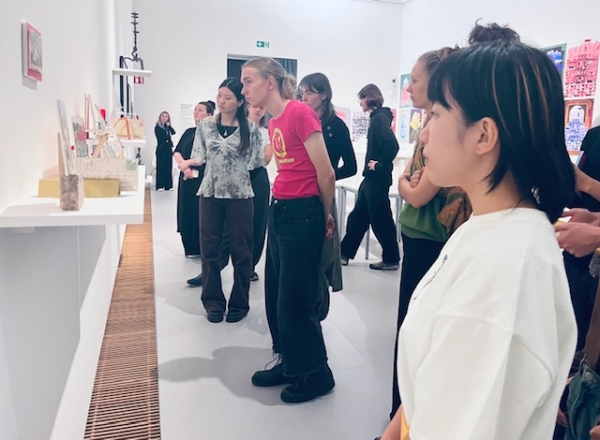
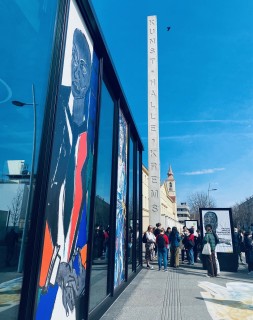
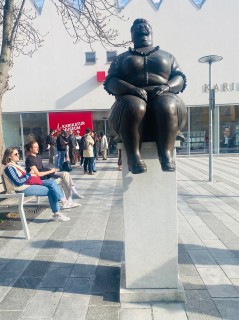
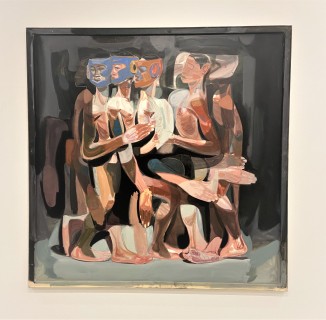
tour of the university buildings combined with a visit to selected program items of this year's festival. In the exhibitions
of the respective departments, both students and teachers took the time to give exclusive insights into the works and their
creation. Many thanks to everyone who participated, supported and contributed to the open, international exchange.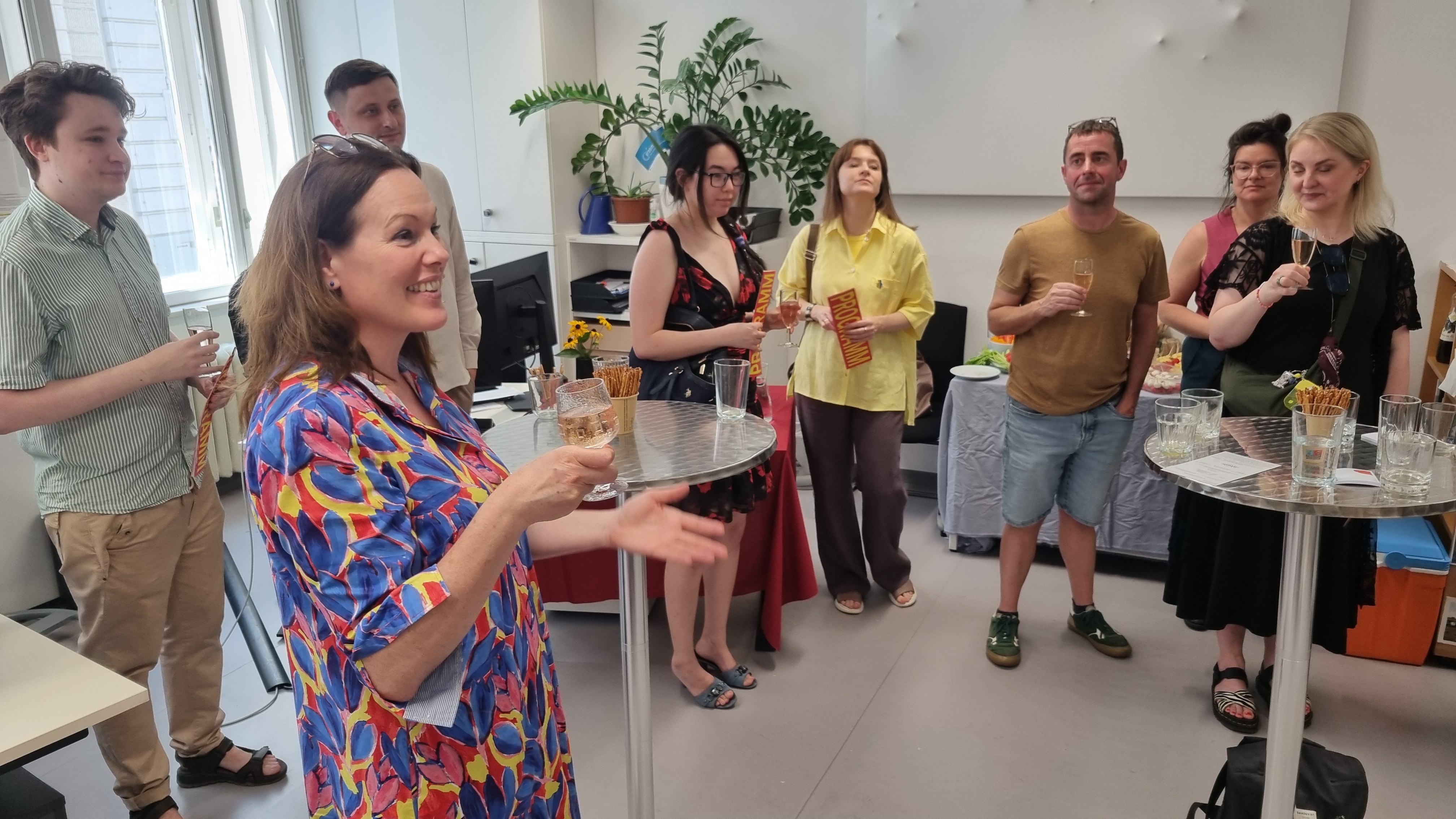
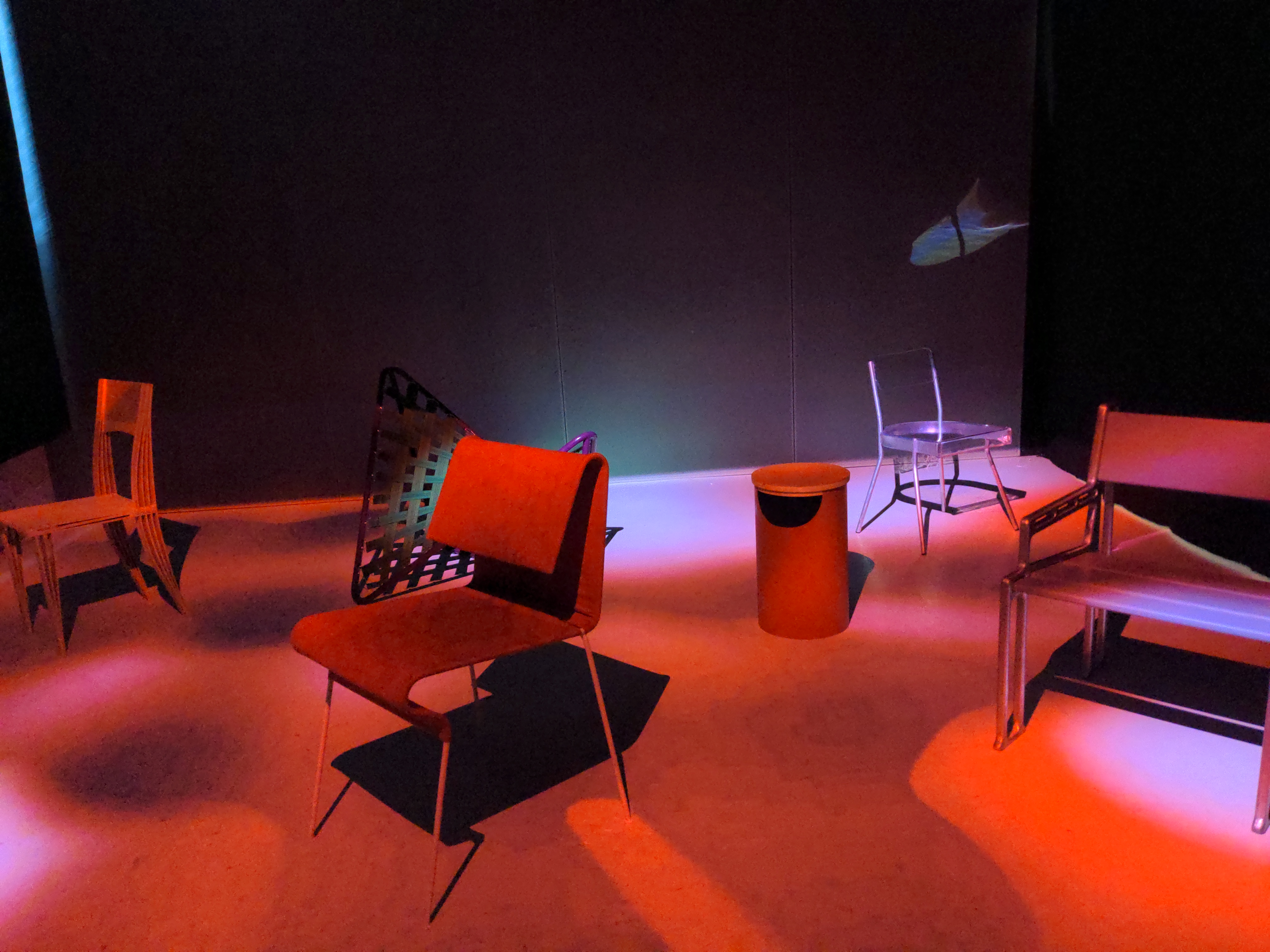
“Worse Than Ivy” _BIP
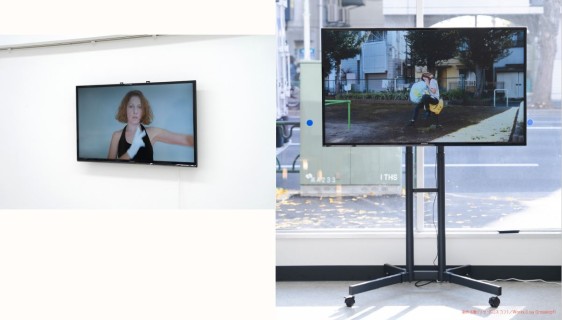
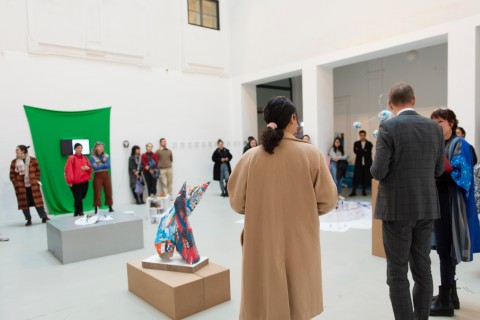
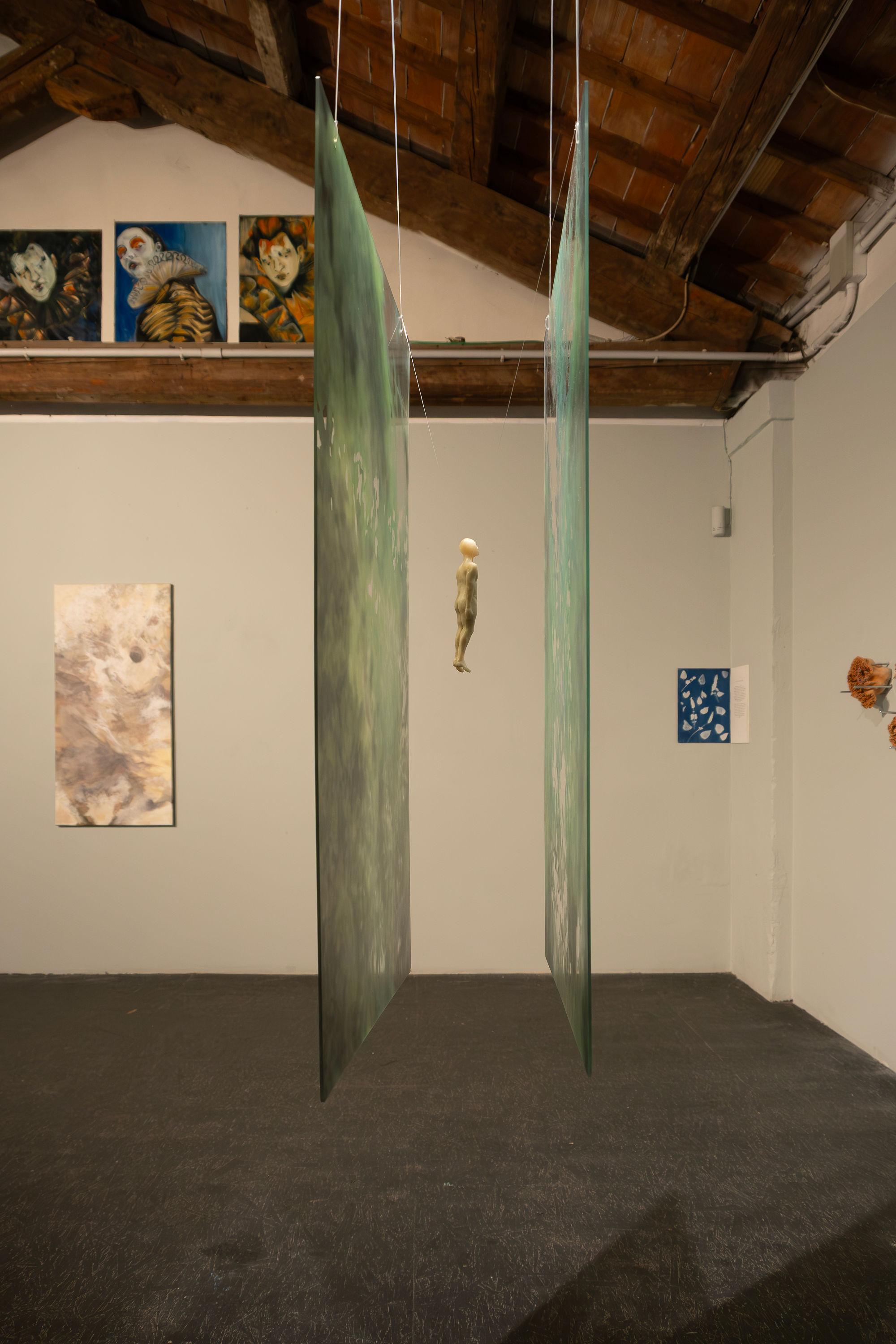
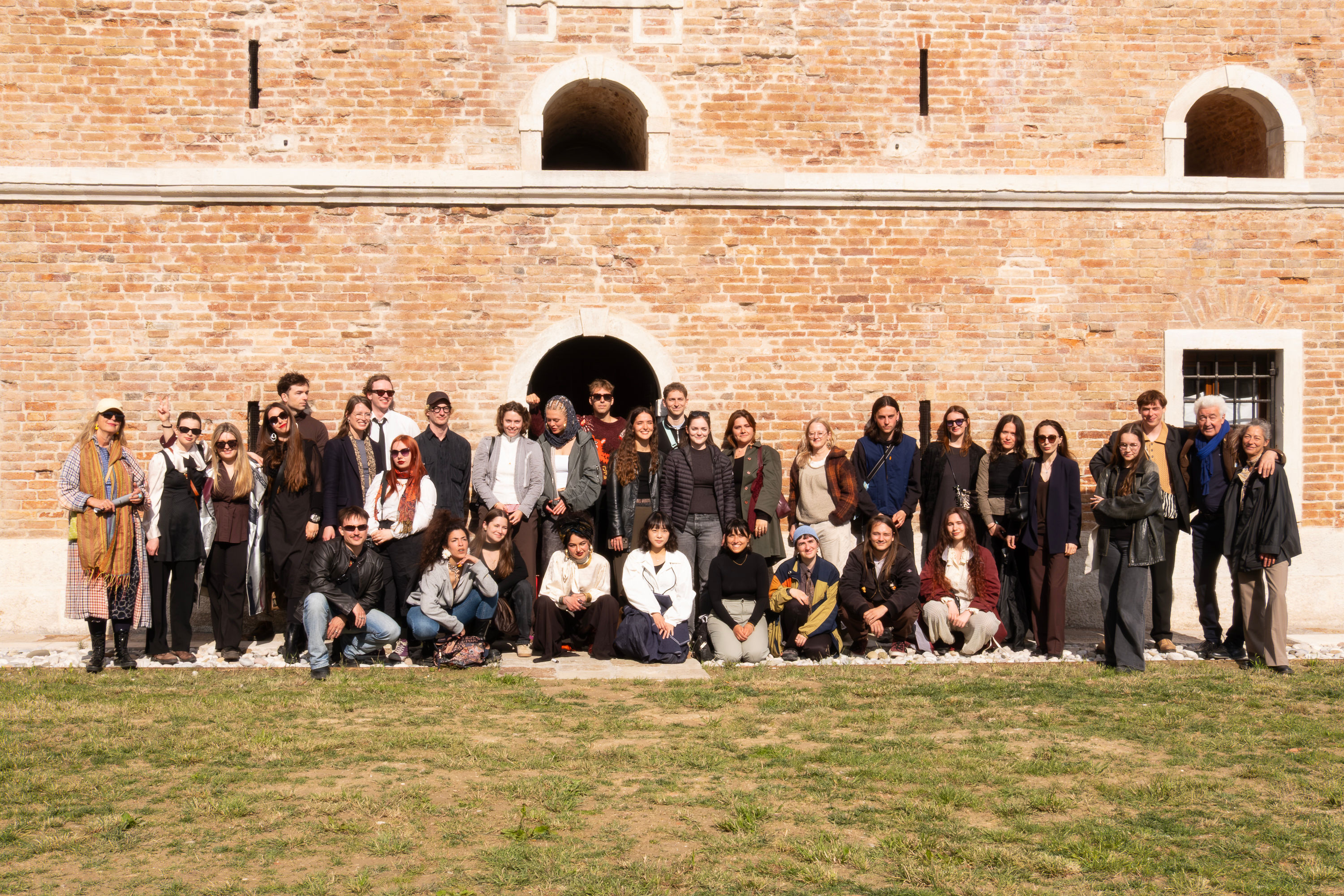
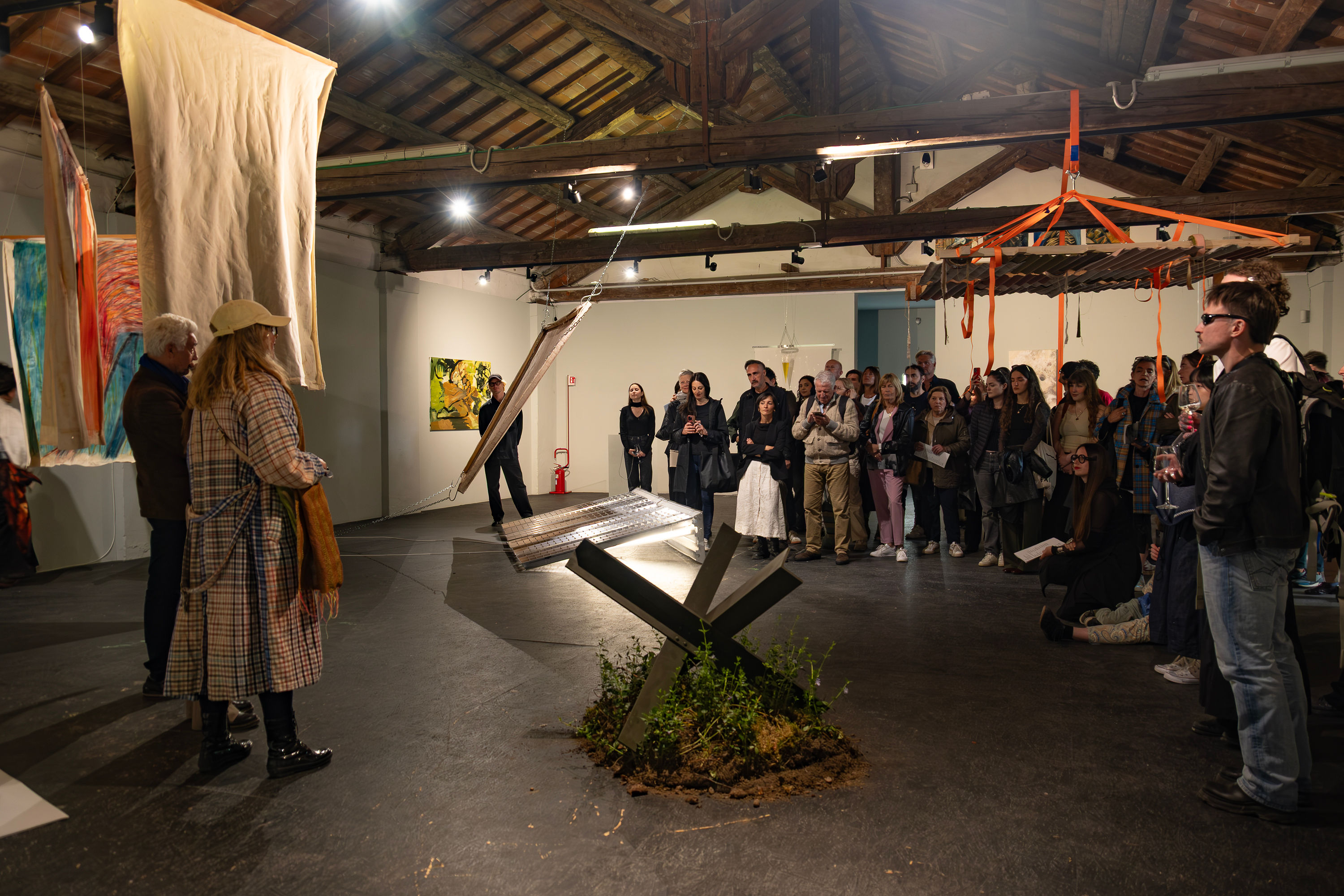
An international group exhibition featuring students from Venice, Dresden, and Vienna took place at Forte Marghera as part of the Erasmus+ BIP program. The Accademia di Belle Arti di Venezia presented Worse Than Ivy, an international group exhibition featuring works by 37 students from the Accademia di Belle Arti di Venezia, the Dresden Academy of Fine Arts, and the University of Applied Arts in Vienna.
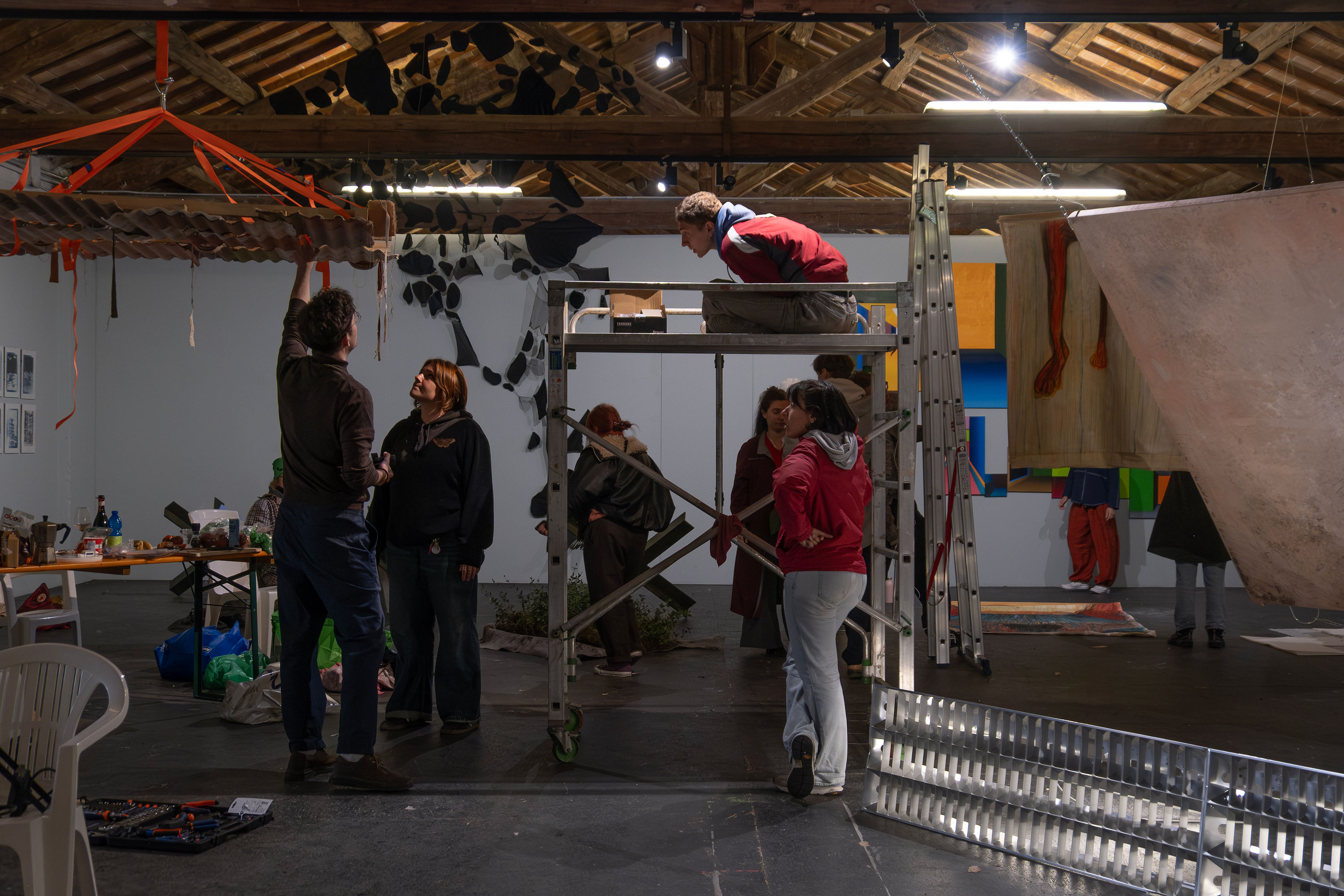
Worse Than Ivy evolved as aspace for collaborative research, in which artistic practice is articulated through a three-way interconnection of art, science, and relationships, opening the creative process to diverse perspectives before it is realized in visual form. The exhibition centered on a reflection on contemporary identity, understood as a constantly evolving process of relationships. The exhibition brings together aheterogeneous body of work: ranging from spatial installations to painting and sculpture to video and multimedia forms, with students from the three participating institutions employing a variety of materials and techniques.
The curatorial concept begins with a critique of the tree-like structure of Western thought and contrasts it with the concept of the rhizome developed by Gilles Deleuze and Félix Guattari: a decentralized, non-hierarchical, and multi-layered structure. Thanks to lectures by microbiologist Judith Ascher-Jenull of the University of Innsbruck, the rhizome was also explored in greater depth in its biological dimension, thereby broadening its interpretation to encompass both metaphor and scientific observation. This visual language is complemented by that of the ivy, understood as growth through contact, adhesion, and lateral spread, capable of traversing and connecting different spaces.
The exhibition is the result of an international collaborative curation, coordinated by Prof. Julia Landrichter, lecturer at the Accademia di Belle Arti di Venezia, together with Univ. Lect. Mag. Silke Geppert from the University of Applied Arts in Vienna and Prof. Christian Sery from the Academy of Fine Arts in Dresden.
The exhibition was preceded by an international workshop week from May 10 to 16, 2026, which took place at Forte Marghera and the Accademia di Belle Arti di Venezia. During this week, students and faculty members collaborated on production, exhibition design, and mutual exchange, including through visits to the Venice Biennale, the Gallerie dell’Accademia, and the venues of the Venetian Academy.
Participating artists: Academy of Fine Arts, Dresden: Sofía Antoniadou, Robin Bassiner, Rhiona Cardwell, Yevheniia Fedosova, Tom Freitag, Michael Glabiszewski, Albert Gouthier, Irina Jank, Carlotta Kiebler, Stefan Kovacevic, Annina Münch, Mihyeon Park, Yelyzaveta Piven, Nina Vanadzeì
University of Applied Arts, Vienna: Peter Bitte, Anastasiia Fashchevska, Birgit F., Klemens Hegen, Lisa Martha Janka, Junming Luo, Mira Prohaska, Agnes Schyberg, Šimon Varaus, Ma-El Weiher
Accademia di Belle Arti di Venezia: Paola Bianco, Elisa Besozzi, Eva Carlan, Sara Cecconi, Elisabetta Dal Pozzolo, Filippo Locatelli, Francesco Martini, Anna
Michelin, Anissa Rosaj, Kristina Svärd (Erasmus), Giulia Tombolato, Vinicio Tronca, Dolores Verdicchio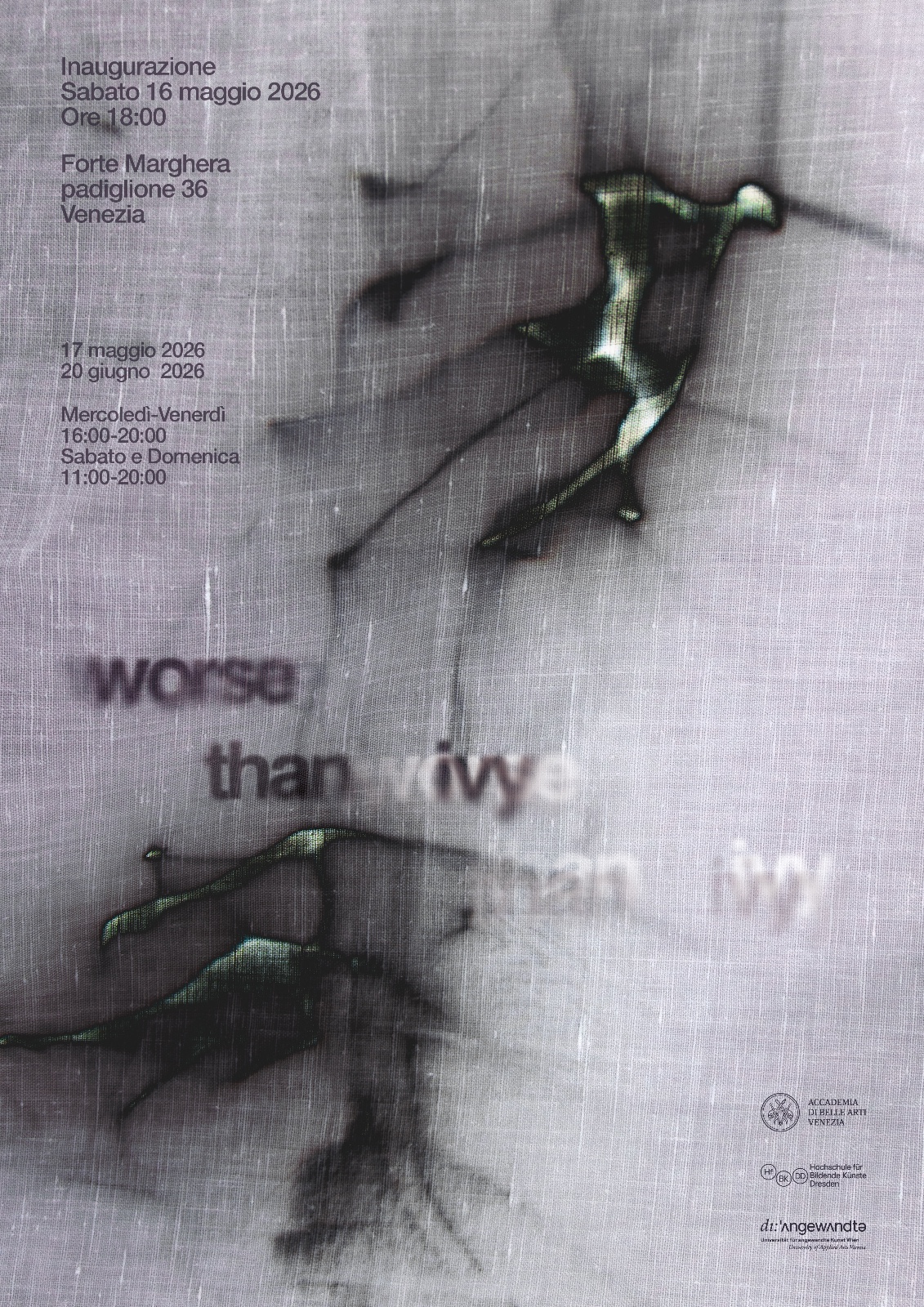
Welcome to Vienna 2026
Study Exchange in the summer term 2026
In the summer semester of 2026, we were able to welcome international students from more than 50 partner universities from
all over the world to study at the University of Applied Arts. A varied accompanying program once again offered our guests
the opportunity to exchange ideas and network across all disciplines and borders.
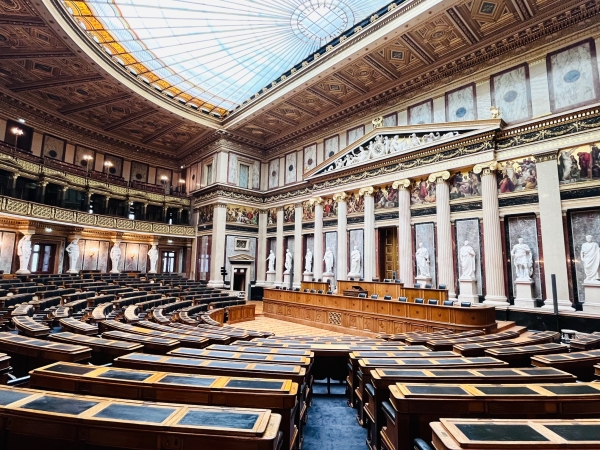
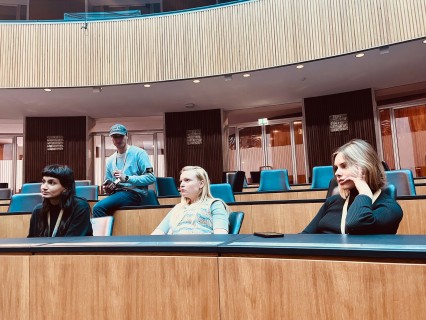
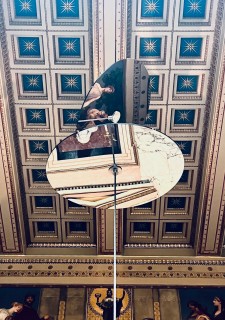
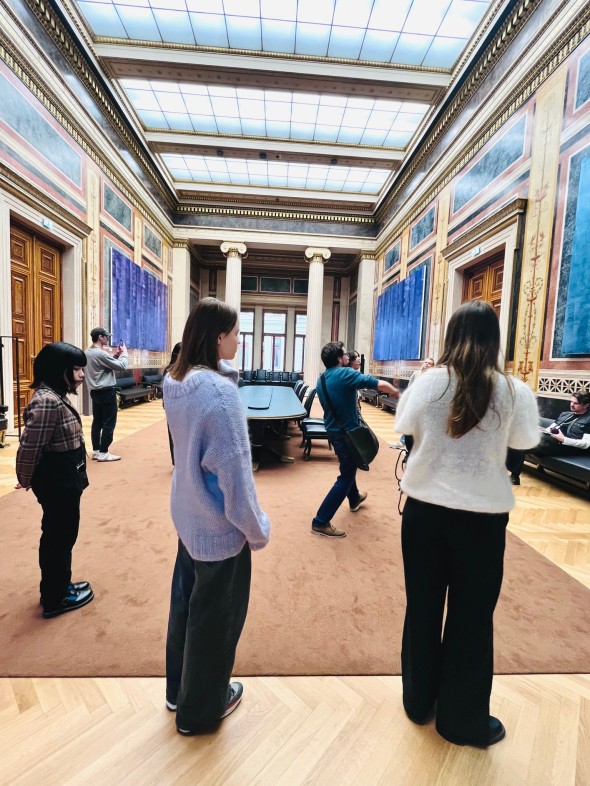
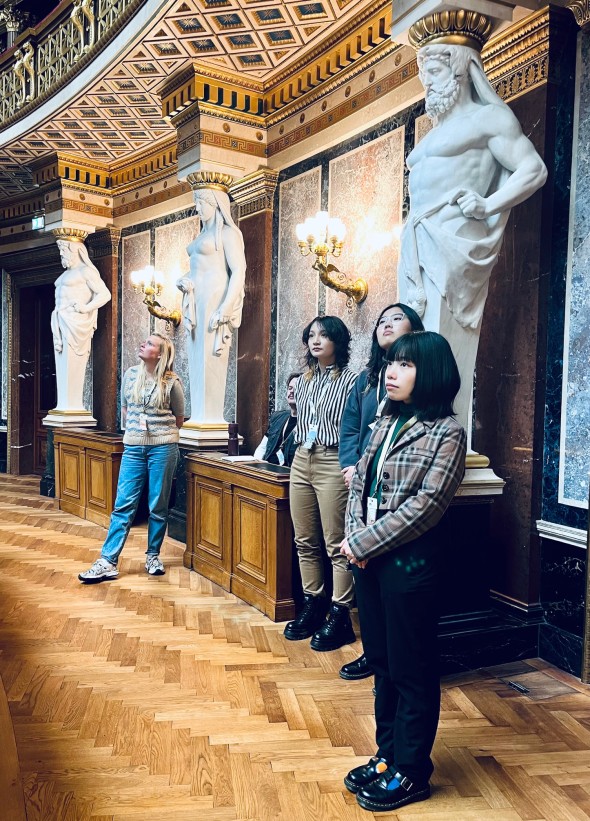
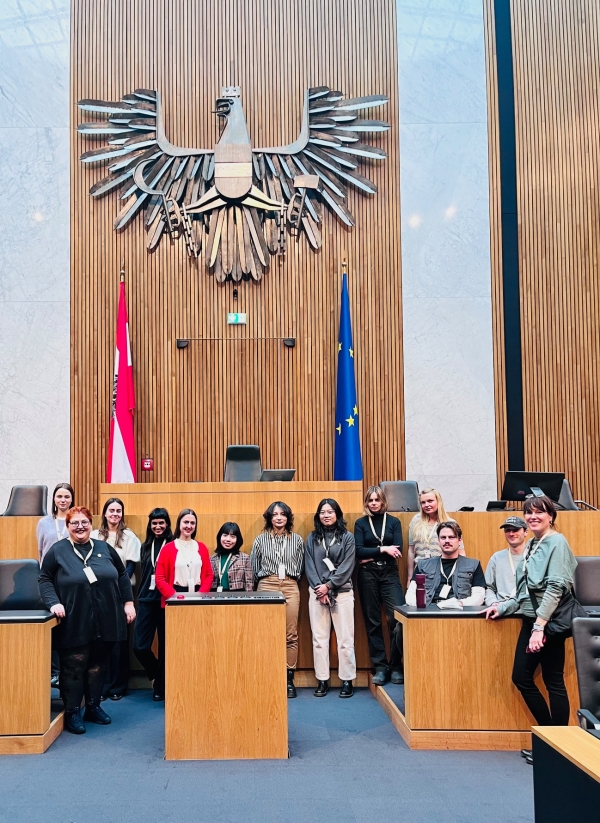
As part of an art tour in the Austrian Parliament, we not only explored the impressive architecture and history of the newly renovated parliament building, but also discovered
the current presentation of modern art in the house. Afterwards, another piece of Austrian culture and history awaited us
in the form of a visit to a traditional old Viennese coffee house.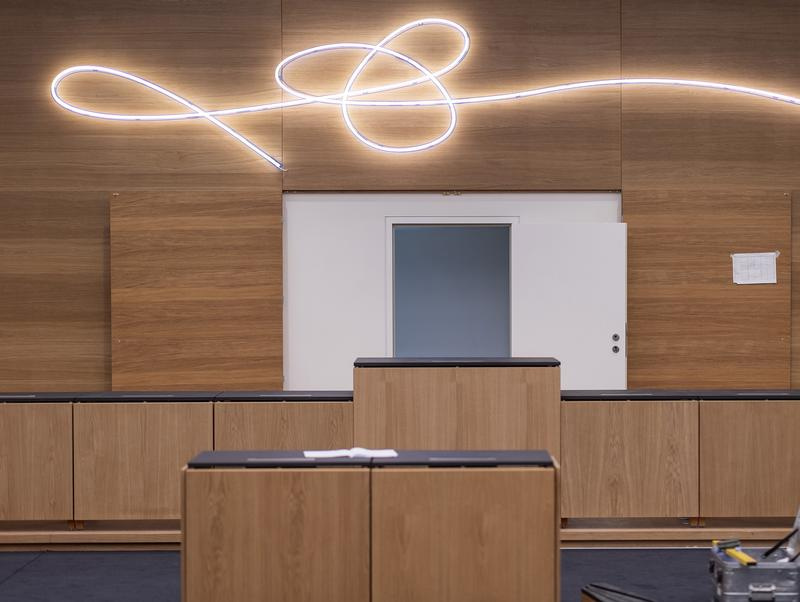
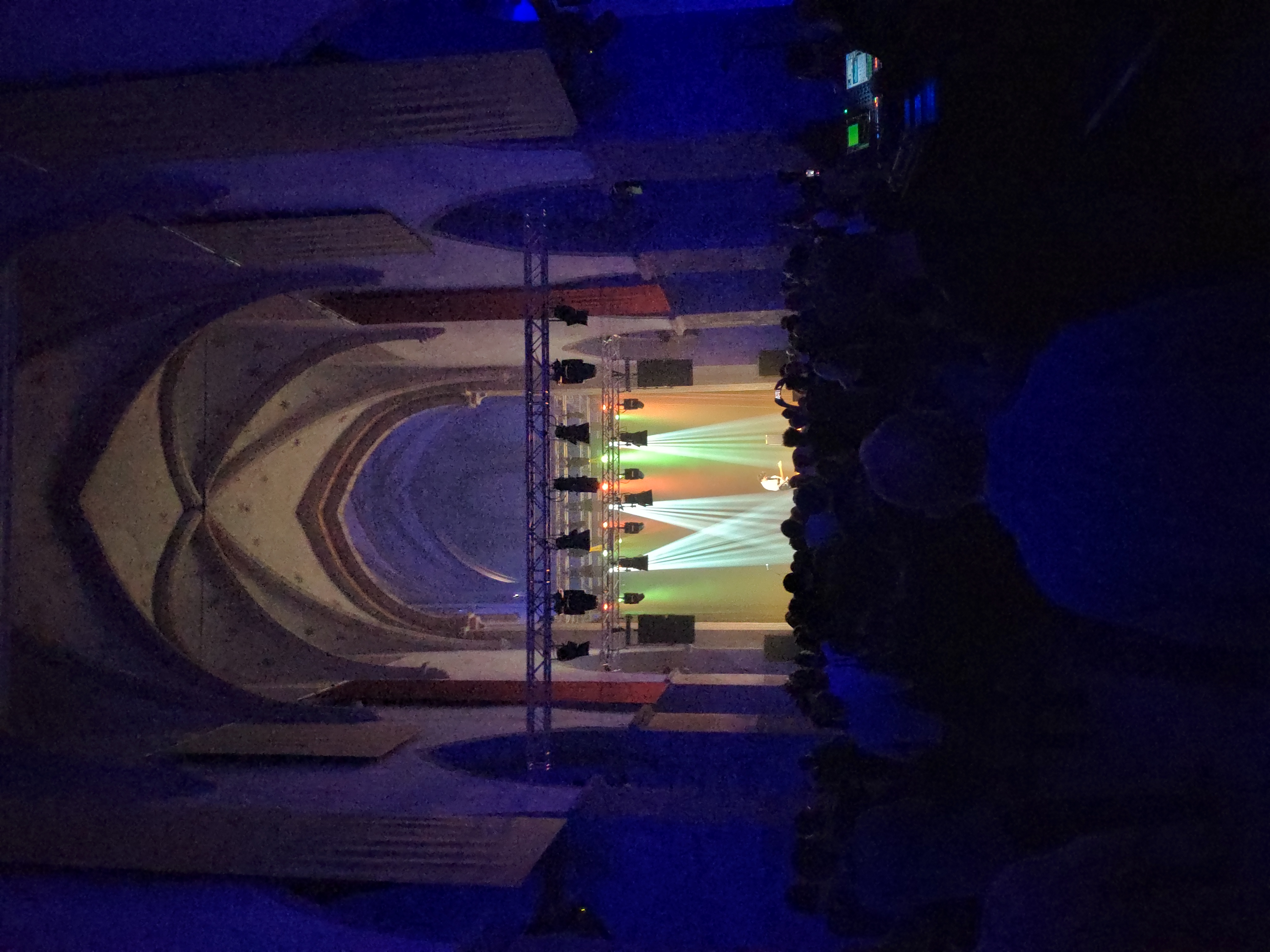
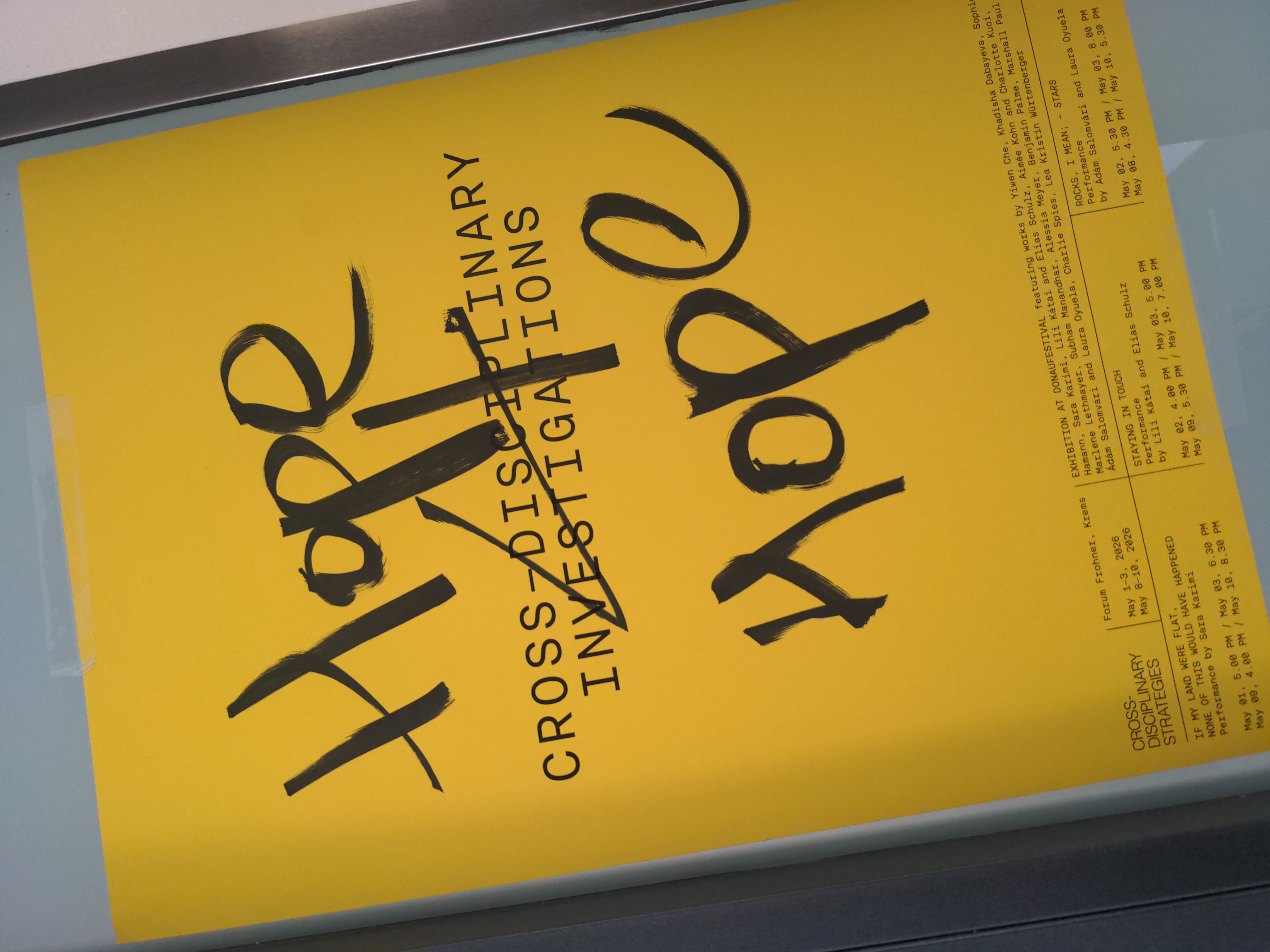
True to the motto "Art and culture beyond the capital", a full-day excursion took us beyond the city border of Vienna to Lower
Austria to the Donaufestival Krems. In addition to concerts and performances by contemporary artists, one special highlight was the exhibition "Hope4Hope -
Cross-Disciplinary Investigations" by students of the Cross Disciplinary Strategies program at the University of Applied Arts.
A big thank you goes to all students, departments, buddies and partner universities who made this exchange possible. We are
looking forward to welcoming the next cohort to Vienna in October 2026.
BIP - Tracing Stone Legacies 2025
Tracing Stone Legacies - International Collaboration on the Documentation and Conservation of the Alois Kieslinger Stone Collection
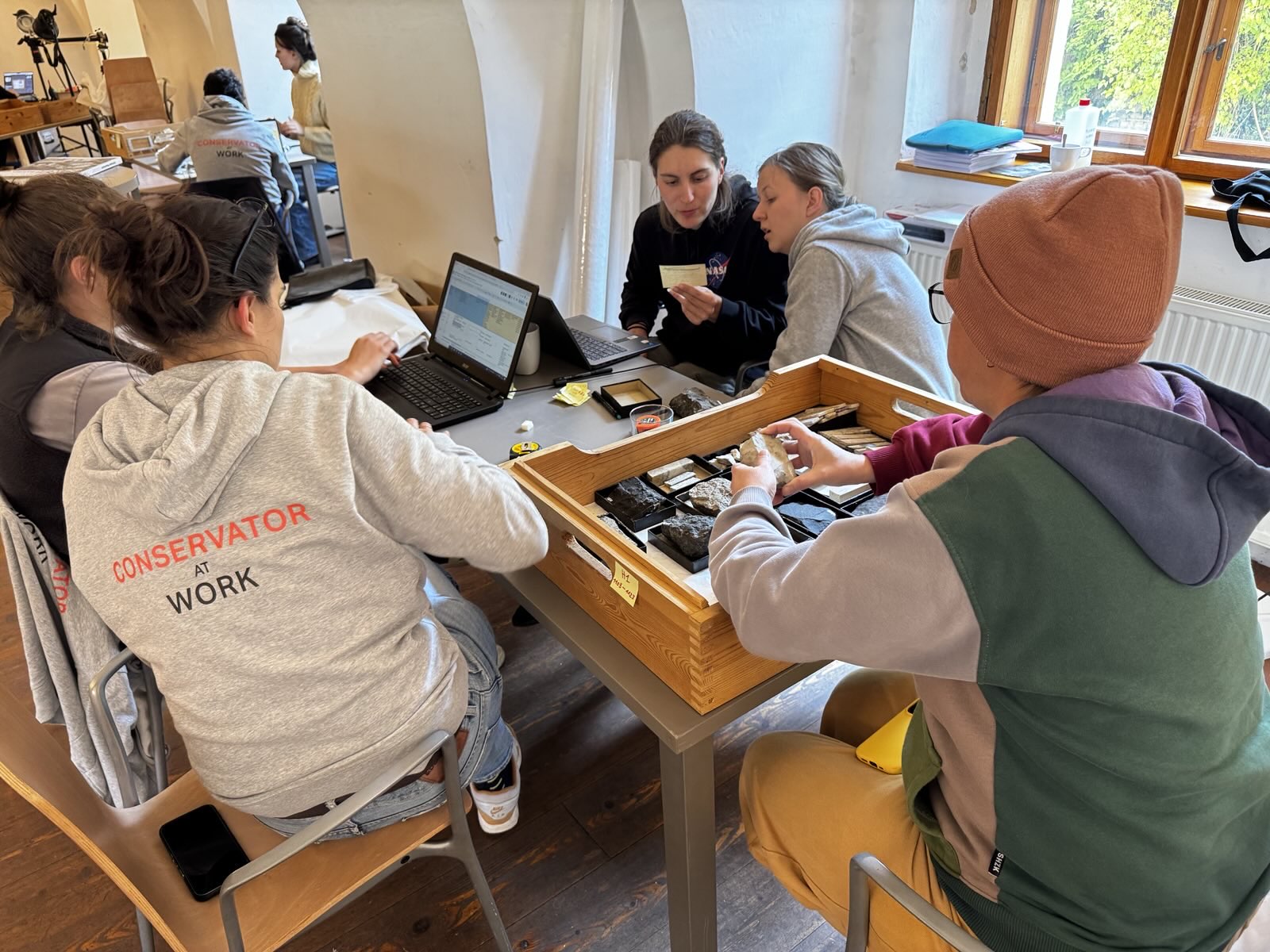
As part of the Erasmus+ Blended Intensive Programme ‘Tracing Stone Legacies’, the extensive rock collection of monument geologist Alois Kieslinger, comprising over 3,500 samples, was documented, digitally inventoried and conserved between 29 September and 3 October 2025. The work also included conservation measures such as cleaning, gluing damaged fragments and improving storage conditions.
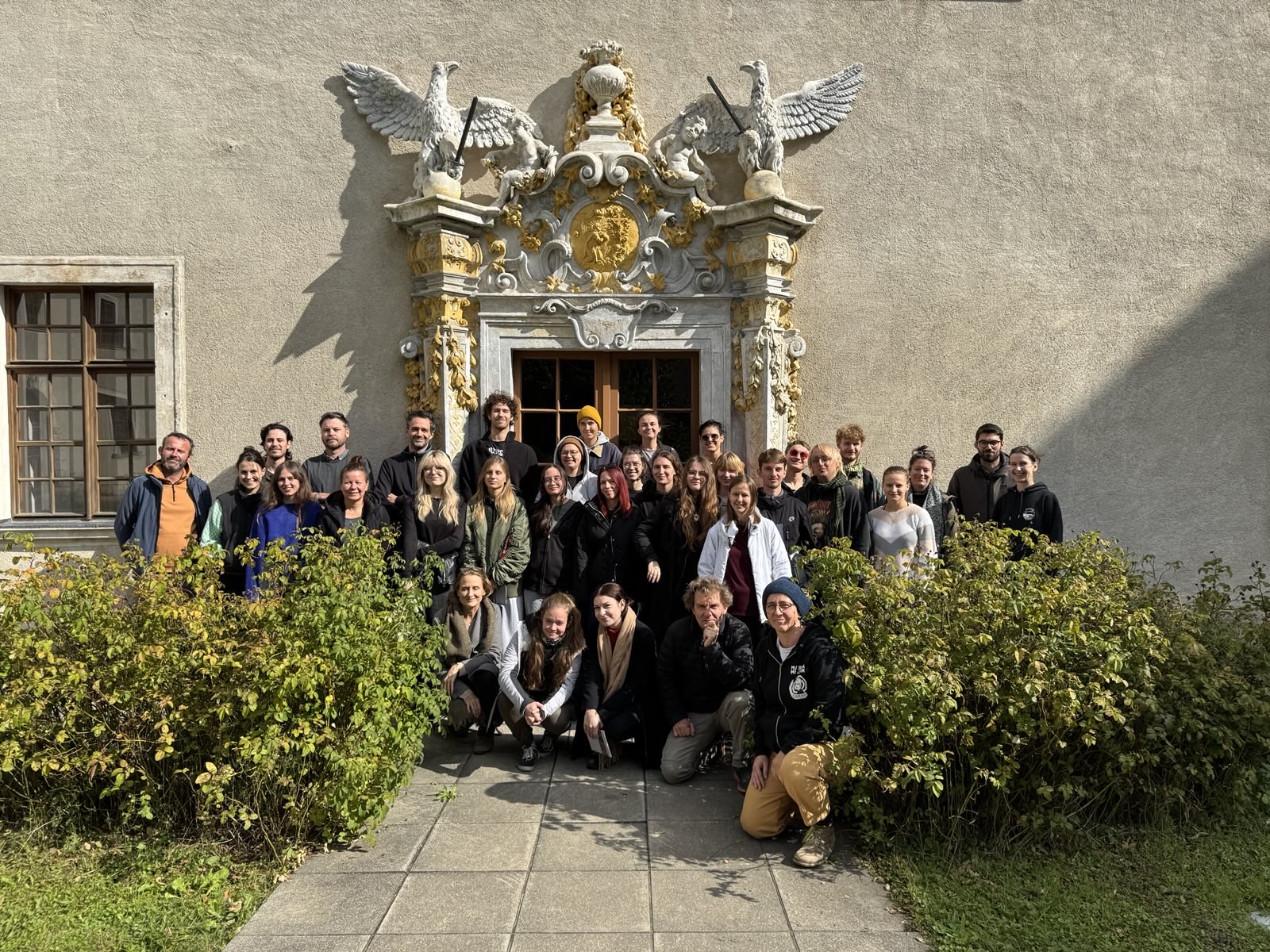
Twenty-four students from the participating study programs as well as other teachers and researchers took part in the programme – a total of around 35 people. The cooperation brought together expertise from Czechia (University of Pardubice – Faculty of Restoration), Croatia (University of Split / Arts Academy – Conservation-Restoration Department) and Austria (University of Applied Arts Vienna – Institute for Conservation and Restoration).
The work took place at the Training and Information Centre for Monument Preservation of the Austrian Federal Monuments Authority in the Charterhouse of Mauerbach, providing a unique opportunity for interdisciplinary exchange on the historical use of stone in the regions of the former monarchy.
ERASMUS DAY 2025
Happiness is not a destination, but a journey.
NEW DATE: 04.11.2025, 10-18h, Georg-Coch-Platz 2, room 010Luck, wheel of fortune, and fortune cookies await university members and visitors for two hours at the main entrance of the
University of Applied Arts, where they can win great prizes. We will also be spreading good cheer and providing lots of information
about mobility options. 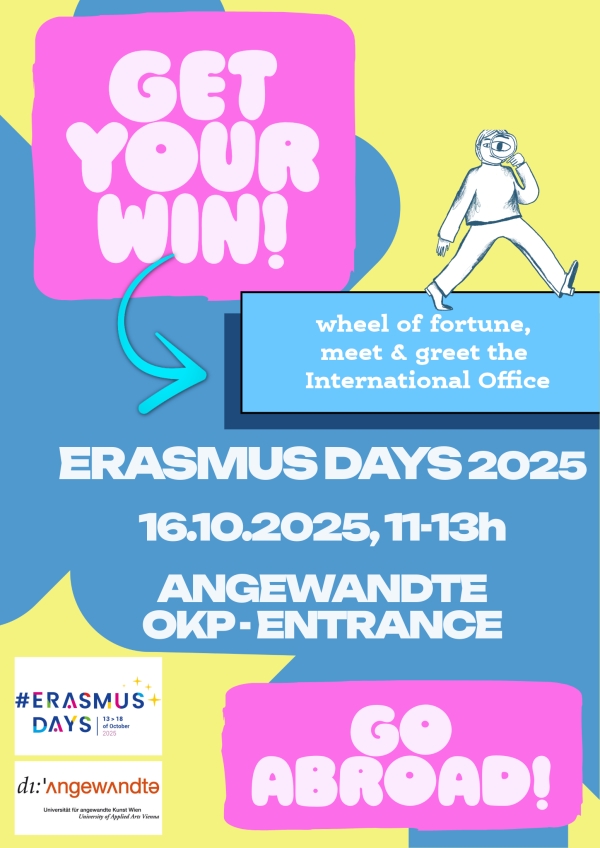
Europe and North America in Vechta: Erasmus+ Blended Intensive Programme brings together design education and social work. 2025
A week full of interdisciplinary collaboration, cultural exchange and creative inspiration: As part of the Erasmus+ Blended Intensive Programme (BIP), international students and lecturers from the fields of design education and social work came together at the University of Vechta in July 2024 to work together in an interdisciplinary manner using creative methods and artistic techniques. The University of Applied Sciences was there with our teacher training programme. Pressrelease in German only.
Angewandte Festival 2025: Looking for our Partner Universities
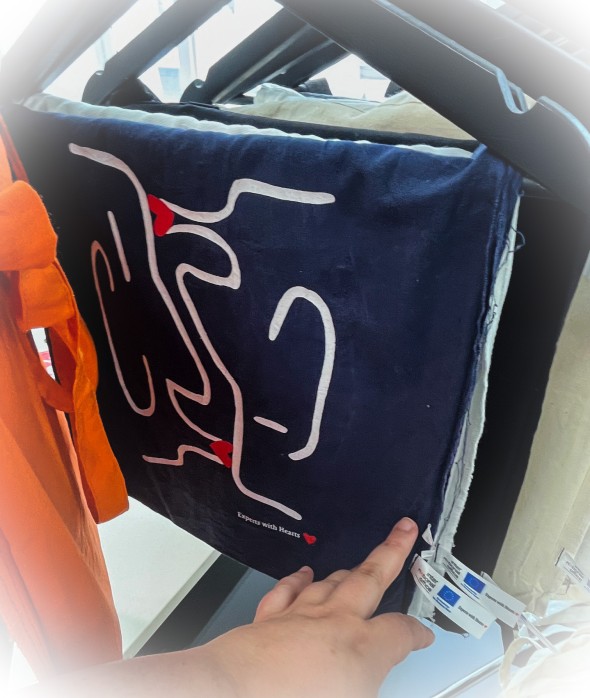
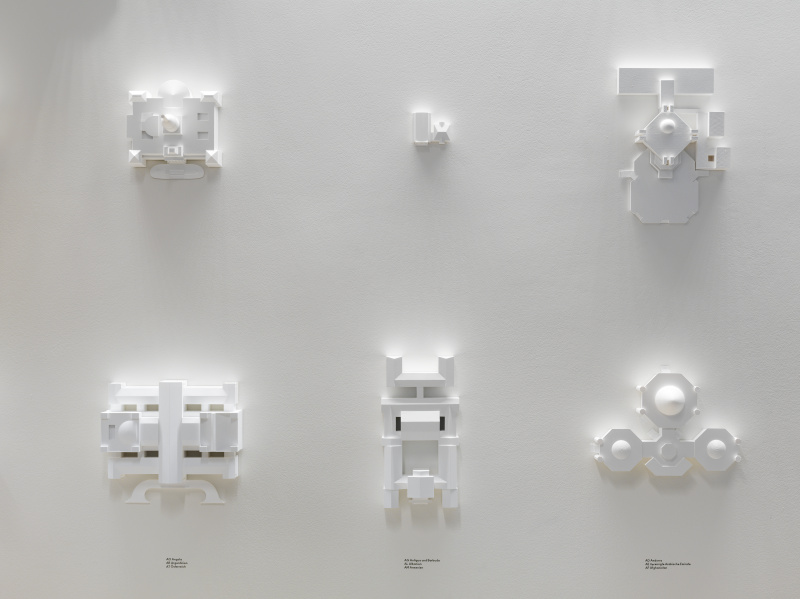
We made full use of our new sound absorbers at this year's Angewandte Festival. Each absorber features an abstract map of
our partner universities in Europe and around the world on a white canvas. Participants had to choose a partner institution
using a laser pointer and guess the corresponding country.
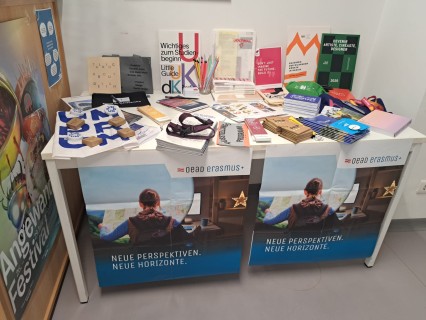
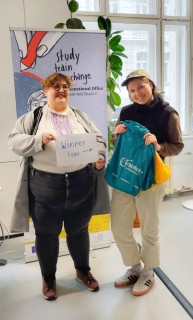
In return, they received a raffle ticket, giving them the chance to win a bag from one of our partner universities. There
was also a wide range of materials (information brochures, pens, measuring tapes and keyrings) available to take away from
our goodie table. We are always delighted to receive visitors on these days, whether they are interested in various exchange
opportunities or whether they are representatives of partner universities who want to take a look at Angewandte. The Angewandte
Festival provides a great opportunity to make new contacts, view students‘ final projects – and most of all, celebrate the
end of a successful academic year.
BIP - “Our republics are Making Love” - Ersamus+ Blended Intensive Project between Vienna, Zagreb and Belgrade, 2025
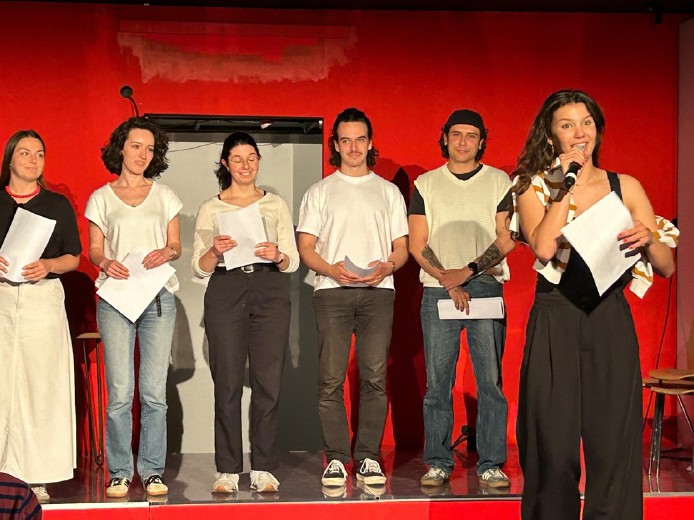
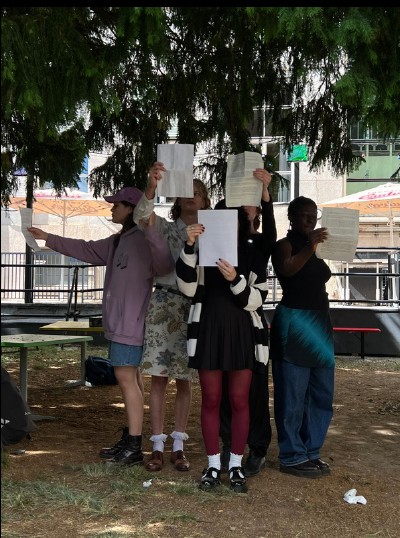
Our Republics are making Love was an interdisciplinary BIP Erasmus+ project organized by our Language Arts program under the direction of Nastasia Penzar
during the summer semester of 2025, carried out in cooperation with the "Wiener Festwochen".
It brought together students from the Academy of Dramatic Arts in Zagreb, the Faculty of Dramatic Arts in Belgrade, and the
University of Applied Arts Vienna. The goal was to open up new perspectives on love, community, and reconciliation through
artistic collaboration, while critically reflecting on national and regional histories of conflict. The focus was on cultural
exchange, mutual understanding, and the joint development of new forms of collective imagination. Six small groups presented
their diverse results, ranging from an analog simulation of post-apocalyptic dating to a performance proclaiming a “Balkan
Republic of Vienna,” and a panel discussion on the impossibility of portraying “Balkan conflicts” on a Viennese stage without
resorting to racism. The project was a highly enriching, challenging in the best sense of the word, and lasting experience
for students, the general public, and faculty alikeone that will resonate for a long time to come. For students, faculty,
and the audience, the collaboration was a lasting and formative experience whose impact extended far beyond the actual duration
of the project. The project thus made the transformative power of art for reconciliation, dialogue, and collective action
directly tangible.
Tour Through the Viennese Vineyards with our Incomings 2025
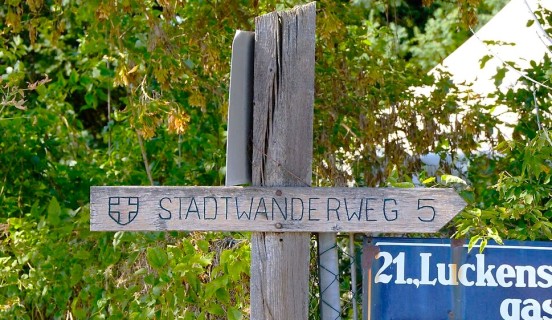
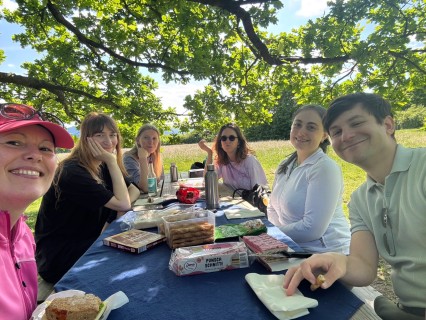
What could be nicer than walking through Vienna's vineyards on a warm summer afternoon? Not much, which is why we packed our incoming cohort from the 2024 summer semester into the tram and took them to the end of Vienna, to Stammersdorf in the 21st district. This is where the city hiking trail 5 begins, which leads through countless vineyards and winds its way around the Bisamberg. After just a few minutes' walk we had a magnificent view of the city. Inspired by this, we walked for an hour and a half before taking a break under a huge lime tree. Strengthened by Punsckkrapfen, trail mix and cookies, we headed back to the tram station. Inspired by this great hike, we have resolved to explore the other city hiking trails in the coming years. Who knows where the next hike with the incoming students will take us in the winter semester of 2025: Sophienalpe, Kahlenberg or the Prater? No matter where, we're already looking forward to it!
Third Man Tour with our Incoming Cohort 2025
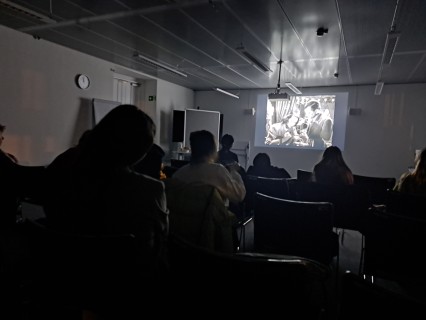
As part of our series of events for incoming exchange students, we participated in a Third Man tour early during the summer
semester. This cult film, directed by Carol Reed and starring Orson Welles as Harry Lime, was filmed in Vienna in 1949 and
remains very popular today. Led by Christopher Timmermann from Vienna Walks, the tour started at the Stadtpark, where we had a view of the Vienna Canal, which is featured prominently in the film. Then,
we walked through the city center on different routes and learned more about the film, its production, and Vienna in the post-war
period. Around 20 students took part in the detailed and beautifully designed tour, which lasted around two hours. Afterwards,
we returned to the Angewandte, where we enjoyed a private screening of the film with popcorn and drinks. The students concluded
that the film's popularity is well deserved it's a real classic from which you can learn a lot about Viennese history.

Students and Scholars of the Angewandte at the Blended Intensive Program "Bodies of Water" in Catania/ Sicily 2025
Everywhere, we are surrounded by infrastructure that supplies water to both public and private spaces. Much of it was designed to be hidden from view. How can we make this infrastructure more visible, particularly from a design perspective, to draw attention to the threat of water scarcity due to climate change? What aesthetic and educational role does the design of water infrastructure play? What ecological, cultural, and architectural issues are associated with the design of our waterways? Participants in the Erasmus+ Blended Intensive Program (BIP), "Bodies of Water," addressed these and similar questions. In Catania, Sicily, students and researchers from our partner university, Angewandte, as well as the ABADIR Academy and the Escola d'Art i Superior de Disseny de Castelló, came together under the direction of Giulia Colletti to discuss these topics. Catania is a hotspot in this regard. The town is located in a Mediterranean region where climate change is particularly noticeable. For instance, winter rainfall has decreased by 40% in recent years. How to manage the available water is of central importance to Catania's population, and despite our geographical differences, it is a topic from which we can learn important practical and theoretical lessons.
From January to February of 2025, five digital meetings were held in which participating students and researchers had the opportunity to get to know each other and receive theoretical input. These meetings were designed to ensure that the participants would have a productive week together in March. While in Catania, the students and scholars engaged in extensive discussions about post-natural studies, water-based art techniques, knowledge from the Global South, contemporary dance, and hydrofeminism. They also went on excursions to cultural sites, such as the Palazzo Valle, to gain a historical perspective on the topic of water supply, as well as to an underground river. Participants agreed that these experiences would inspire them to create artistic projects and final theses that will make the gathered knowledge accessible to a wider public.
Welcome Day Summer Term 2025
As every semester, we used the time before the actual start of courses to welcome our fantastic new cohort of 51 incoming
students to Vienna. Our colleague Lena Wicke-Aengenheyster set the mood by playing a "Waidmannsheil" (a traditional hunting
call) on her horn. After this musical introduction to Austria and a few words of welcome by Astrid Anna Behrens, Head of the
International Office, the students received goodie bags and a copy of their best friend during their stay in Vienna, our Exchange
Guide.

After a presentation and a quiz about Vienna, we enjoyed a delicious lunch, where students shared dishes from their home countries.
The Welcome Day concluded with a tour of different university buildings: One of our regular students offered a short walking
tour, which included the Studio Digital Photography, the Workshop for Wood Technology, and of course, most important for students,
the canteen.
We wish our students a good start to the semester and look forward to hearing about their fascinating projects here in Vienna!
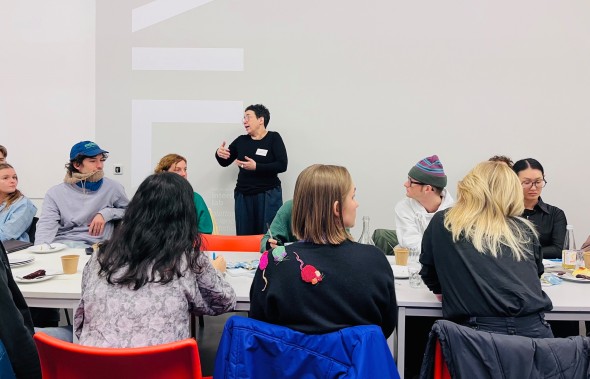
Austrian Food Culture with Steffi Parlow 2025
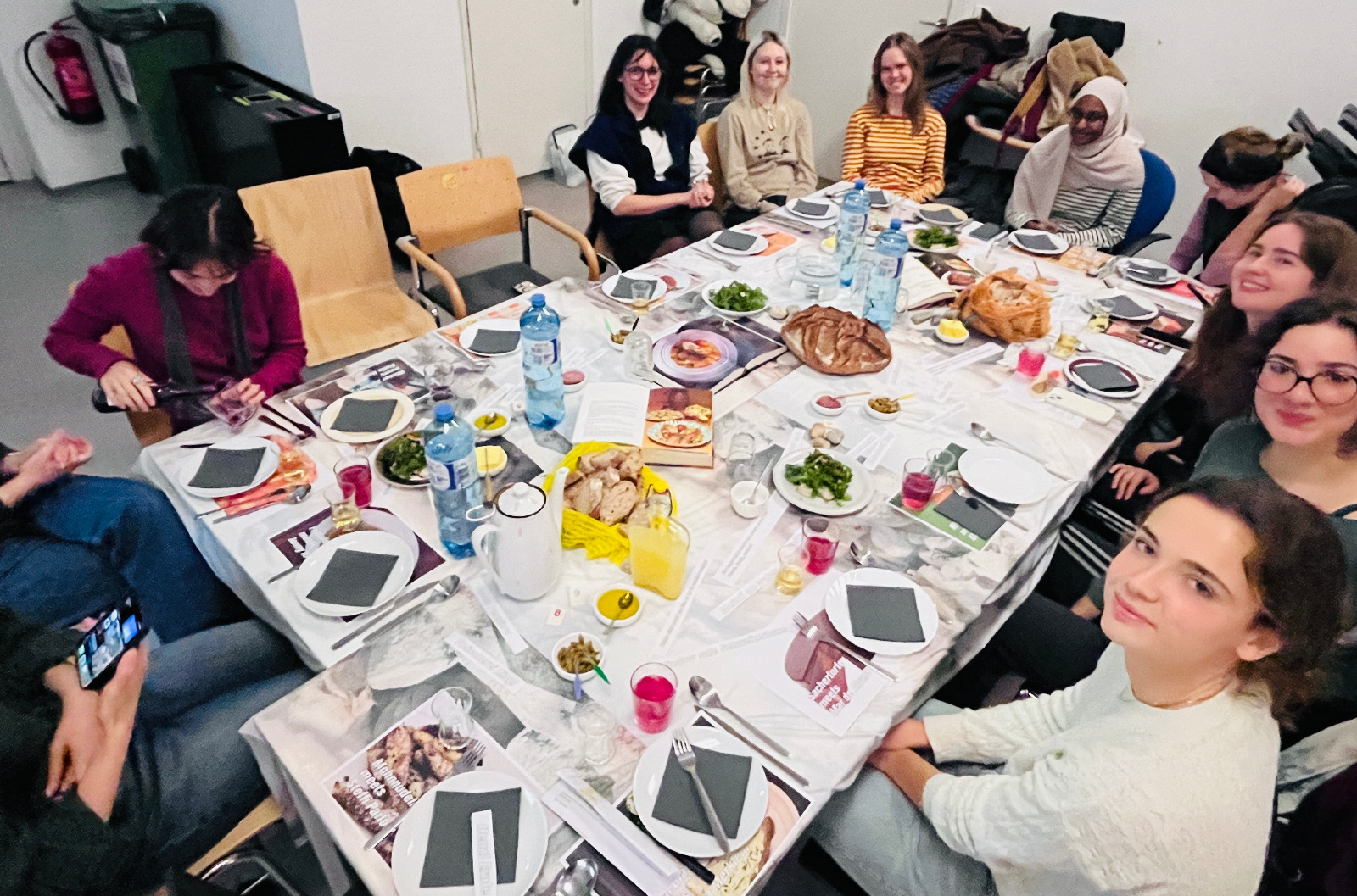
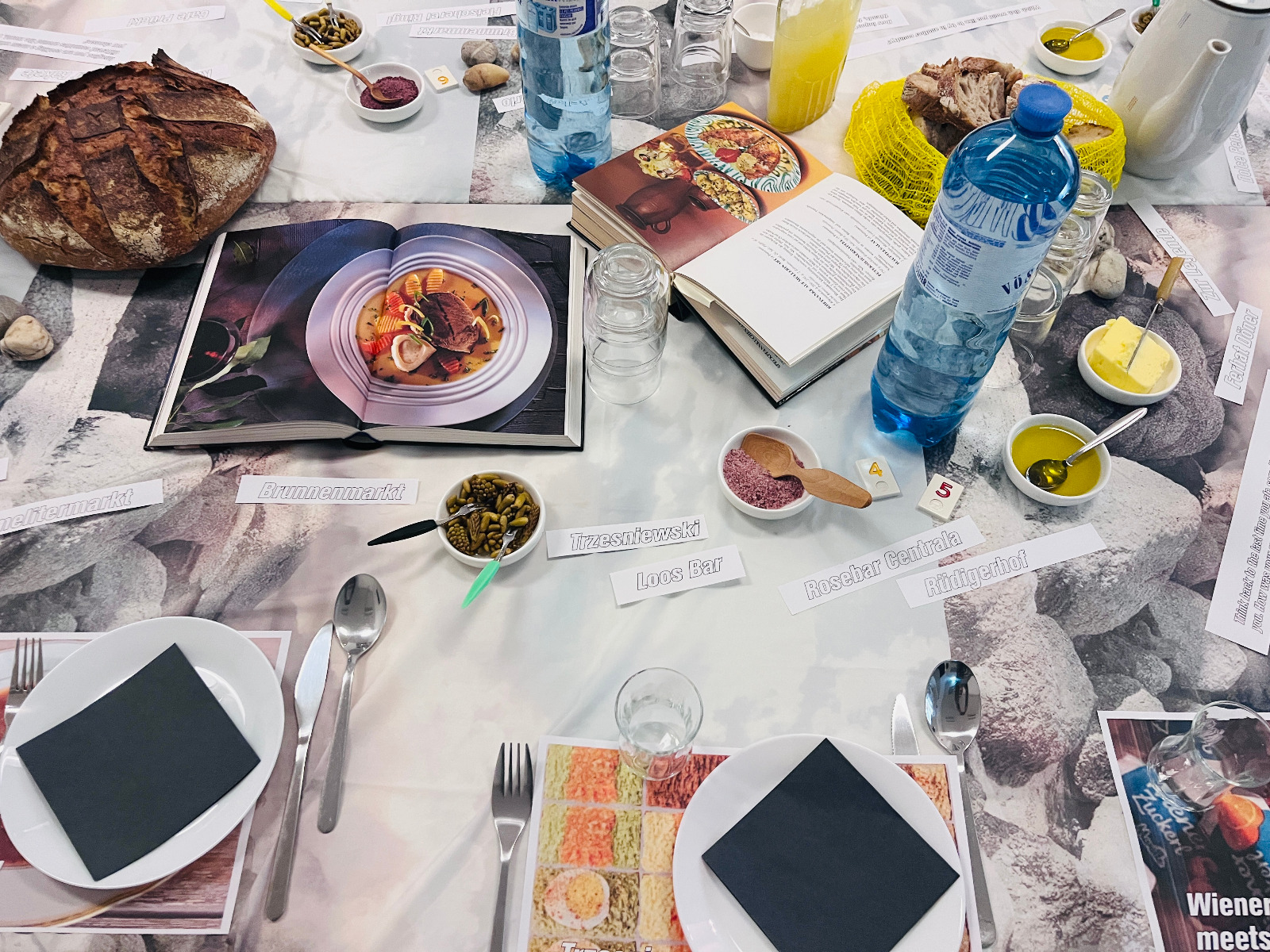
What does a Wurstsemmel say about Austria? And what does a Gabelbissen reveal about heritage and culture? In December of the
2025/26 winter semester, our incoming students from all over the worldfrom China and India to Europewere invited to a special
event with chef and artist Steffi Parlow.
On each place setting lay a placemat featuring a typical Austrian dish. For most, Wurstsemmel, Gabelbissen, and other such
dishes were anything but familiarand that’s exactly what made them the perfect starting point for conversation: Where does
this food come from? What do people associate with it? And what stories lie behind it?
Together, we cooked, tasted, and talked about lesser-known Austrian dishes. In this way, Austrian cuisine became an international
meeting placecurious, personal, and full of topics for conversation. And at the end, there were plenty of local tips to go
around.
DIM THE NOIZZZZE 2024
Akustikelemente für das International Office
The development of our Dimm the Noizzzze project began with a problem - or rather, an opportunity. It was about optimizing the acoustics in the International Office. Our vision was to combine acoustic elements with the content and philosophy of the International Office. The designs submitted dealt in various ways with themes such as travel, topographies and also our location - one of the best-known Art Nouveau buildings in the country.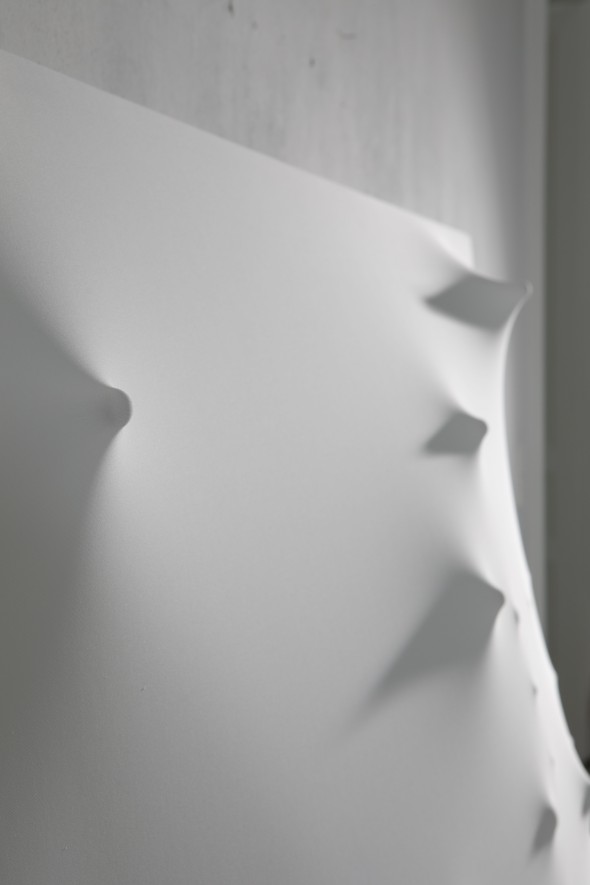
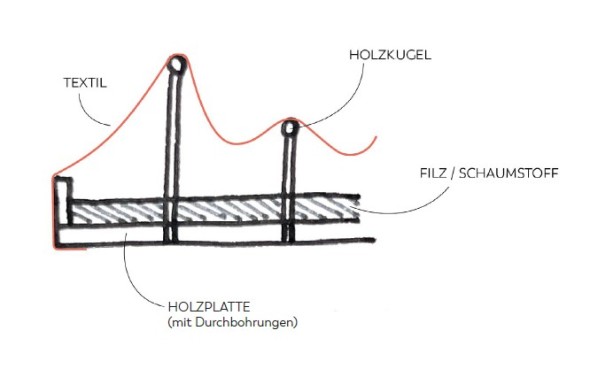
In the end, we were won over by the proposal from Mia Tešić and Anna Sudy.
The two students, who are spending the 2025 summer semester abroad at the Dutch Design Academy Eindhoven and studying Industrial Design at the Angewandte, took the Angewandte's international partner universities as their starting point and presented us with their relief-like idea.
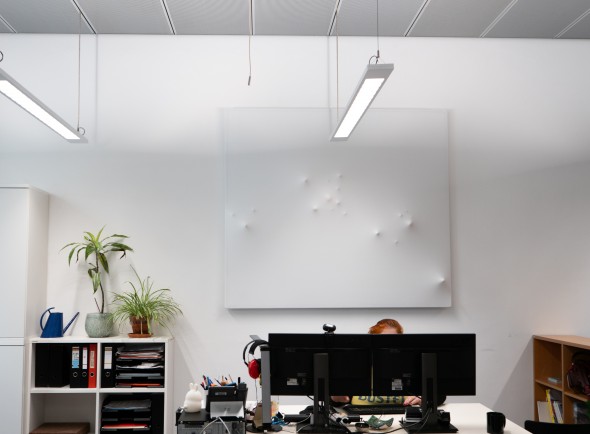
The result is two large wall objects with tensile structures, each measuring 160 x 180 cm, which depict a European map with its destinations on the one hand and a world map with global destinations on the other by means of punctual elevations. We would like to take this opportunity to thank acoustician Andreas Horvath from NextAcoustic for his great expertise and support, Marcus Bruckmann (Industrial Design) for his valuable assistance and last but not least the wonderful colleagues in the Angewandte wood-workshop for their time and advice in realizing this project. We are overjoyed with the result and feel that the room quality has now improved significantly.
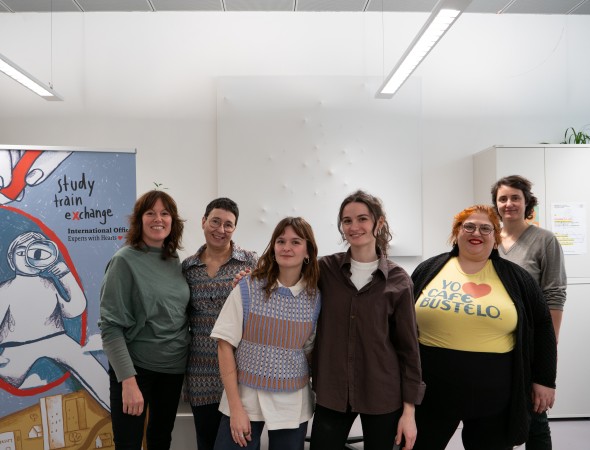
f.l.t.r.: Astrid Anna Behrens, Doris Grössing-Schima, Mia Tešić, Anna Sudy, Veronika Merklein, Lena Wicke-Aengenheyster
ERASMUS DAYS 2024
Our International Office impresses with prices, information and good humor
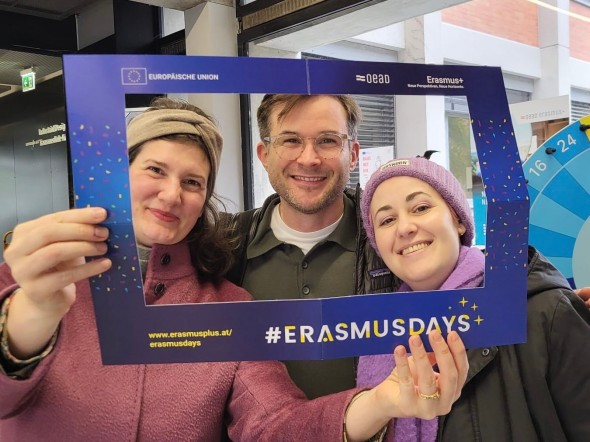
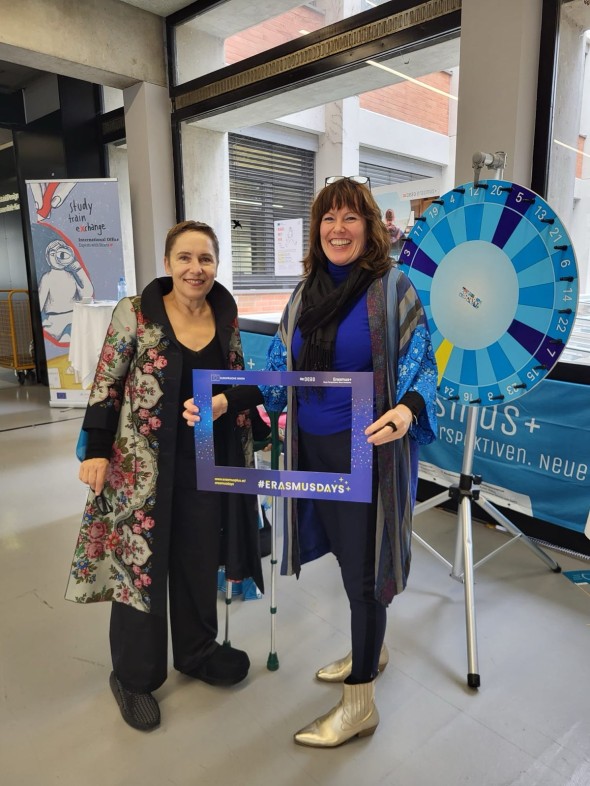
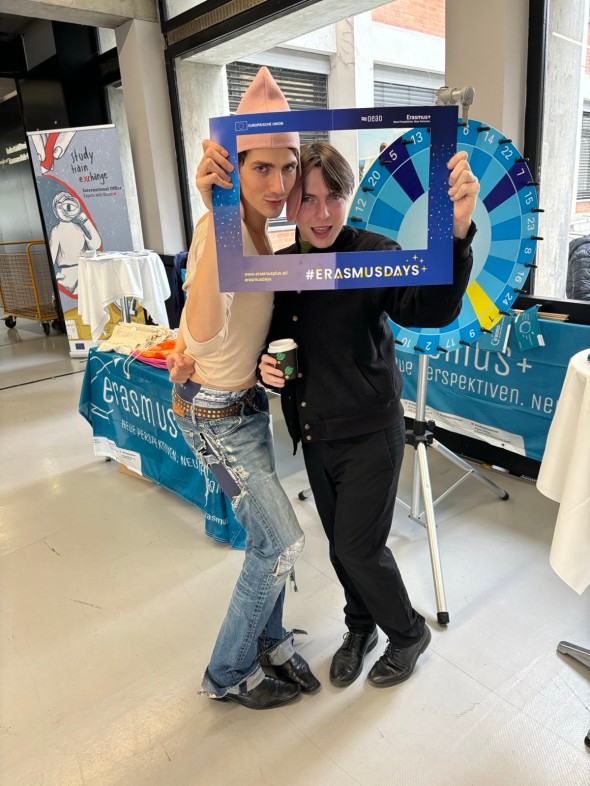
Happiness is not a destination, but a journey. With luck and a wheel of fortune, our students, staff and our rector as well
as visitors won nice prizes at the main entrance to the University of Applied Arts Vienna. In addition, we bribed with happiness
and a lot of information about mobility options.
Sonic Imprints 2024
Jiun You Ou was on Artist-in-Residence with an Angewandte-scholarship
The International Office offers a broad portfolio of support options. In addition to the Erasmus+ program, students can also
apply for scholarships within the university. The Foreign Exchange Grant is open to all students who are going abroad and/or
are undertaking special or short projects and research stays abroad that cannot be covered by Erasmus+. We also offer the
Equality for Mobility-scholarship for students with disabilities and chronic illnesses, with care responsibilities and with
economic barriers.
Jiun You Ou is studying Applied Art & Science and accepted an invitation to Switzerland to realize a sculptural-acoustic project
as an artist-in-residence. The International Office was able to support her with our scholarship abroad.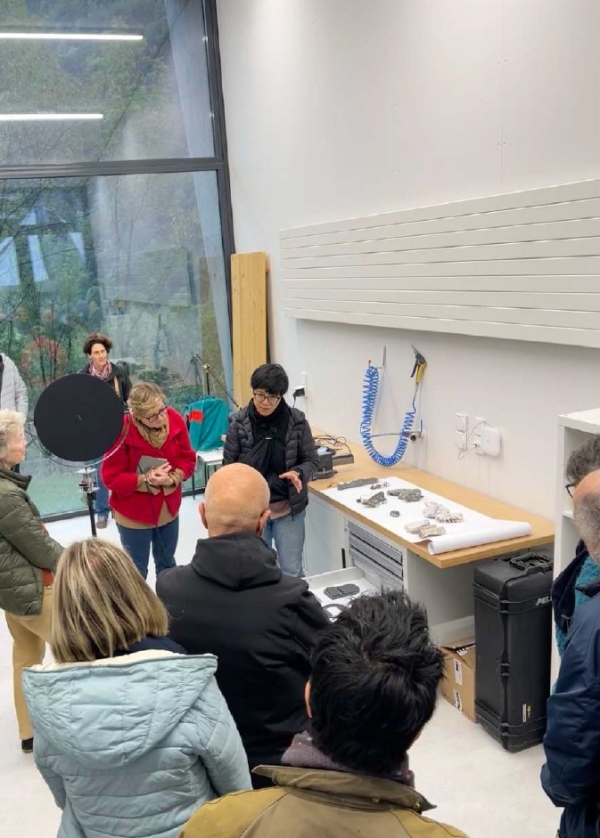
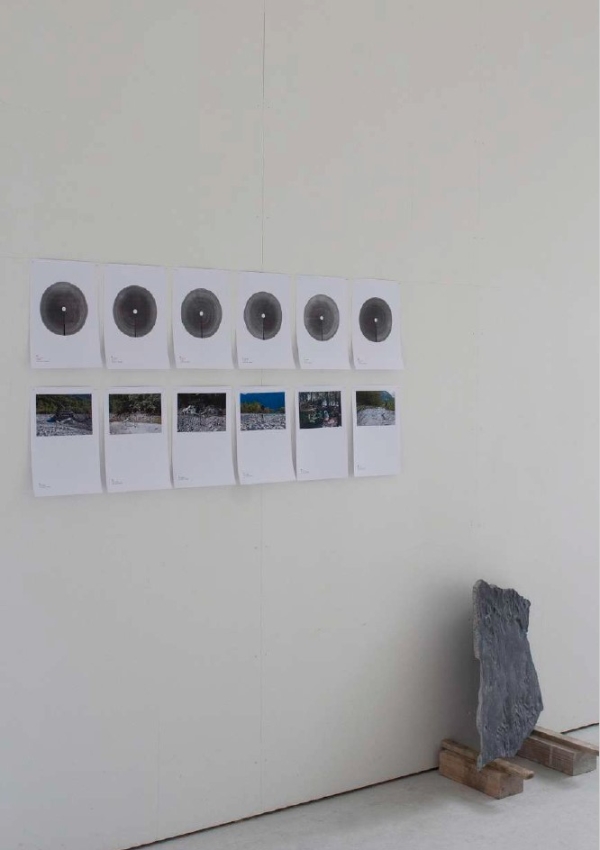
Let Jiun You Ou have her say:
At Centro Internazionale di Scultura I revisited the relationship between the natural patterns of stone and sculptural form,
oscillating between the material spectrum of lightness (sound) and heaviness (stone). The experience sparked further questions,
such as how to execute precisely outdoors, how to refine the interplay between sound and sculpture, and how to navigate the
dimensional space between two and three-dimensional forms.
What excites me most is the potential of the devices themselves (as sculptures), (altered) spectrograms, and stone slabs.
These disassembled and layered elements imply the formation of a time domain 'atlas'. Furthermore, they may also be related
to a macro-view regarding me (as an Asian) living and moving like a nomad in Europe - the visit is transient; the gaze is
anyway ephemeral.